Translate

Showing posts with label Indianwildlifeclub. Show all posts

Monday, August 26, 2019

Butterfly Pond Project in Gurugram

"Gurujal"*, an initiative by Gurgaon administration to address the water crisis in Gurgaon, invited proposals by citizens in three areas of pond cleaning, bio remediation and micro STP.

Our butterfly pond project was shortlisted for an EXPO held on 16th August 2019.


Here are some pictures from our Exhibit and the Expo

EXPO BANNERS in the 9'by9'stall


Visitors and the Deputy Commissioner at the Stall


*Gurugram has been facing a water crisis at an alarming rate. The rapid urbanisation and constant pressure on the ground water has led to it being a DARK ZONE.  To address this issue the government has formulated an initiative named Guru-Jal.
It is an INTEGRATED WATER MANAGEMENT initiative under the District Administration of Gurugram, Govt. of Haryana in collaboration with, Hero, CII, TERI SAS etc, to understand the gravity and the root causes of the problem. It aims to address the issue using a systems thinking approach with creative design solutions.

Saturday, June 22, 2019

Naturalist Program at Satpura Tiger Reserve

The three days naturalist program at Satpura Tiger Reserve, promoted by Indianwildlifeclub.com has concluded successfully.  The attendance was excellent and participants who attended had various and diverse interests in wildlife.  According to our trainer Ashish Shah, many participants could be resource persons for birding, reptiles, insects etc for the next such program planned.  The Forest Department Officials were available for field studies and extended full support for the program.


Participants Naturalist Program at Satpura Tiger Reserve 17th 19th June, 2019


Copy of certificate issued to participants


A class room study in progress

Wednesday, April 24, 2019

Breaking News -Butterfly Pond in Thousand Shades Butterfly Park, Gurgaon


Contribute to make the butterfly pond a success!.   Contributors who give Rs 1000 and above will be mentioned.


Here is the support link

https://indianwildlifeclub.com/funding/butterflypond/pay.aspx


Sunday, October 7, 2018

First release of captive-bred* vultures in Asia

See our video on vultures of India at

https://youtu.be/3ktlmpnyDvE

First release of captive-bred* vultures in Asia

Nepal and SAVE witnessed a further landmark for Asian vulture conservation on 17th September 2018, when the Government of Nepal and national and international conservation organisations released 12 critically endangered white-rumped vultures Gyps bengalensis, including the first eight birds actually hatched within the conservation breeding programme. Releases last year of birds reared (but not hatched) in the programme have so far shown very promising signs of survival and success, and in addition, 20 wild birds have now been satellite-tagged  - 11 in 2017, and a further 9 just prior to this release.

The first gate opens and several birds immediately joined the wild birds at the carcass outside. Photo: BCN
The work is a truly collaborative effort of many partners, led by Bird Conservation Nepal (BCN) and the National Trust for Nature Conservation (NTNC) together with Chitwan National Park and the Department of National Parks & Wildlife Conservation (DNPWC). The Director General of DNPWC and a small group of officials, scientists and community leaders watched as the BCN team quietly opened the doors of the release aviary using a remote pulley system. Six of the twelve vultures exited the release aviary and joined the wild birds feeding on the buffalo carcass almost immediately, and all twelve came out within half an hour. Six of the birds later returned inside the aviary where they spent the night, but immediately flew out again the following morning. The release site is at the village of Pithauli, Nawalparasi, close to Nepal’s Chitwan National Park.
“This is a world first for the release of white-rumped vultures actually bred in the Nepal breeding centre and is a major step for establishing secure wild populations now that we are confident that the veterinary use of diclofenac has been stopped in this country” said Mr Man Bahadur Khadka, DG, DNPWC.
The previous week, an expert team from the UK (Royal Society for the Protection of Birds (RSPB) and Forestry Commission) together with the BCN team had fitted satellite tags to the birds with carefully designed harnesses (using the thoracic cross-hatch method), ready so they can be monitored after the release, and give us vital information about their movements, and any problems or causes of mortality . The team also caught and tagged nine wild white-rumped vultures, which are already being monitored, to compare their movements and behaviour with the released birds.

Fitting the satellite tag and wing-tags a week before the release. Photo: BCN
“The monitoring of the satellite-tagged birds is an important way to understand how well the birds are surviving, and to assess the safety of the “Vulture Safe Zone” said Ishana Thapa, CEO of BCN.  “If these and the previously tagged birds all survive then this is a further sign that the vulture conservation efforts are working”. Krishna Bhusal, BCN’s Vulture Conservation Program Officer of BCN added: “Releasing vultures, hatched in captivity, in this location, combines our in situ and ex situ efforts to save these birds, and the process of keeping the birds in the pre-release aviary for several months before release allows them to adjust and interact with wild birds - This is an exciting day for me and all Nepal”.

The officials slowly open the first gate of the release aviary using the remote pulley. Photo: BCN
Chitwan’s Chief Conservation Officer, Bed Kumar Dhakal said “We are proud that the vulture breeding at the Breeding Centre in Chitwan National Park has taken off, with nine chicks last year and six more in 2018”.  Jemima Parry Jones, UK birds of prey expert from the International Centre for Birds of Prey (ICBP) who advises the project said “Breeding and releasing these birds is a great credit to all involved, and shows how a combination of international and national partners can work successfully together to achieve very significant results. The huge success of the VSZs has meant we can have these amazing releases and aim towards all the vultures being back out in the wild by 2023”. Craig Pritchard, senior vet representing ZSL said how the birds all appeared to be in very good condition, and how pleased and privileged he felt to be part of this joint collaborative effort.

Briefing and speeches of the release immediately beforehand. Photo: BCN
Mr DB Choudhary, the local conservation community leader added “The Nawalparasi community is proud that their area has been selected for this historic release, following a series of vulture conservation initiatives in the area including running the vulture-safe feeding site here since 2006”
Chris Bowden, RSPB and Saving Asia’s Vultures from Extinction (SAVE) Programme Manager said “The successful removal of veterinary diclofenac across Nepal thanks to a lot of hard work, is the real reason behind the success so far and without this we couldn’t have gone ahead. These are the first ever Asian vultures to have been hatched and bred within a breeding programme and taken to the concluding phase of release to the wild. This illustrates the rationale behind these efforts and if enough birds survive without encountering killer veterinary drugs, we will be on track to release all the birds by 2023”
The vulture conservation work in Nepal is carried out with the full support of DNPWC, and led by BCN. The breeding centre was established in 2008 and is jointly managed by NTNC and Chitwan National Park. The main funding (and technical) support has come from the RSPB, but significant resources also come from all organisations involved as well as the Zoological Society of London (ZSL) who provide veterinary support and helped with funds for the release aviary, and the International Centre for Birds of Prey (ICBP) in the UK.

Flying free. Photo: Rajendra Gurung BCN
Calendar of the Nepal white-rumped vulture release programme so far:
April 2017: Transfer of the first 6 captive-reared* birds from the breeding centre to the release aviary.                                                  Trapped, satellite-tagged and released 6 wild white-rumped vultures
November 2017: First release of 6 captive-reared birds.  (Note five of the six released birds still alive and well after 10 months, but one was lost, possibly predated by a leopard)
Caught and tagged 5 more wild birds.
April 2018: Transferred 12 vultures from the breeding centre to the release aviaries.
September 2018: Released the first 8 captive-bred birds*, plus a further 4 captive-reared birds.                                                                        Also tagged and released 9 more wild birds.
There is now a total of 37 satellite tagged white rumped vultures, 20 wild birds and 17 released. All were caught or released in Nawalparasi in Nepal.
*Captive reared vultures are birds that came in as chicks collected from wild nests (in 2009 and 2010) reared and placed in the breeding centre for the breeding programme.
* Captive bred vultures are the offspring of those captive reared birds, hatched and parent reared in the breeding programme.

For more information on the Saving Asia’s Vultures from Extinction (SAVE) partnership and further news updates check www.save-vultures.org  and www.birdlifenepal.org

Wednesday, September 12, 2018

Wildlife Conservation as a career choice

Shaleen Attre, co-founder of indiansnakes.org talks about her views on a career in wildlife. She is interviewed by Susan Sharma.


Monday, April 30, 2018

Events organized by IWC members

At http://Indianwildlifeclub.com we have opened an interactive forum for members to write in about issues they feel strongly about.  We have more than 50 categories under which you can write.

Your post can be formatted with our text editor and you can include website links too.

We also have a category called "Events".  Many IWC members are actively involved in ground level programs in their respective areas.  Many organize bird watching lessons,  herpetology classes, eco-treks,  photo exhibitions etc.  IWC forum encourages you to write about these local events.

To upload photographs in the article, you need to first publish them elsewhere, say in a blog, and then copy/paste the picture into the article.

I have organized two events recently, a bonsai appreciation class on 7th April, 2018 and a workshop on waste management and home composting on 29th April, 2018

Here are some photos of the events

Bonsai Appreciation Class by Mr.Showmik Das


Composting Workshop by Padma Nandyal

LET US MAKE A DIFFERENCE AT GROUND LEVEL, wherever we are! 


Friday, January 26, 2018

Wildbytes.tv


I have uploaded over 100 videos relating to nature and wildlife in wildbytes Youtube channel.  These videos are drawn from my experiences in various National Parks in India nad abroad plus videos of experts talking on related subjects wherever I could manage hearing and recording them. 

The channel is aimed at all nature lovers who care about the environment we live in. 

It will be good if you can watch and write in your comments about the content of the videos.  Many of you will have comments to add which will enrich the content in each video. 
Please subscribe to the channel to be able to comment

https://www.youtube.com/channel/UCng_XfXfguqI-mX1x1xXdWA

Tuesday, October 24, 2017

Sustainability Day- 24th October. An appeal to recycle our solid waste responsibly

What is plastic doing to our beaches?

The pristine Varkala beach in Kerala
A close-up view of the waves at Varkala beach, Kerala

"Mother earth is a temple, not a dustbin" screamed a notice board in a tea shop at Varkala beach, Kerala.  


This plastic bottle was found lying quite close by to the above notice


Further away, more bottles


The plastic, thermocol, Styrofoam etc which we so carelessly throw away, finally lands up in the ocean, carried by rain, rivers etc.


When I write "plastic" and hit the search button on  http://IndianwildlifeClub.com, I get a few pages of results.  Here are a few random one liners from those results, which sum up our plastic malady.

"Major cause of floods was Mumbai’s plastic bags choking the city’s drainage system."

"Storm-water drains choked with ubiquitous plastic carry bags are partly responsible for Mumbai's woes."

"The Maharashtra government announced the decision to ban the use of plastic bags across the state after reviewing the situation."

"A landmark 1990 study by the research firm Franklin Associates—says
 Plastic is not biodegradable, it litters our waterways and coastal areas, and has been shown to choke the life out of unsuspecting wildlife."

"The leather-back turtle feeds almost exclusively on jellyfish and cannot distinguish between plastic bags and jelly fish"


Fish and sea birds have been choking on plastic litter


What is plastic doing to our National Parks?

We saw a tiger in Corbett national Park with a plastic gunny bag in its mouth.

If we go by road from Delhi to Corbett National Park, we have to pass a place called Kashipur.  Here, for miles at a stretch, we see plastic gunny bags, just like the one our tiger is carrying.  These are filled with more plastic and more non-bio degradable stuff.  They seem to be piled on the road sides for ever awaiting disposal/recycling.


We need to empower the waste recycling factories and give them visibility before we drown ourselves in plastic waste.

The short video I put together on World Oceans Day, portrays the simmering anger of the oceans through the incessant beating of the Dhol.

Watch it at


And now, we have the Bengal tiger holding up a plastic cement bag left out near a water hole, as if to ask what am I supposed to do with this?

Watch this terrible episode we were witness to at the link


Let us empower the rag picker who helps recycle bio-degradable waste.


Dr.Susan Sharma is the Founder of http://IndianWildlifeclub.com  

IndianWildlifeClub is a community of nature lovers who care.  You can join in by registering free at our site.  We are mobile friendly.

Friday, June 30, 2017

Nature Lovers Feel Connected Wherever they go!


Nature lovers feel connected wherever they go!  I experienced this lately when I visited my cousin who lives in far away San Diego.  The cabbage butterfly I saw in the botanical garden of San Diego reminded me of Dr.Surya Prakash from whom I had learnt that the Indian cabbage butterfly migrates by flying 300 to 400 miles a year. It  is one of the three in India which migrate long distances.   Want to learn more fascinating facts about butterflies from Dr. Surya Prakash?  See the short film in our you tube channel

https://youtu.be/KLz3rsawl88

The sparrow happlily mud bathing on the ground of an open restaurant reminded me of the sparrows mud bathing back home.  It also made me appreciate the fact that the restaurant owners who had grown local flowers all around, had made the ground  inviting for birds with leaf moulds and mulches.    

On a cruise in the Soth Pacific Bay, the tour guide kept calling attention to the naval might of the USA and the ships and drones which had occupied the shores of the Bay.  On one side a large group of Cormorants were busy fishing, reminding us how nature, especially birds, can adapt anywhere.  The sea lions displaced were huddled up on bait barges (because of which the cruise was called "Sea lion Cruise").  Having seen the interaction between a mum and pup sealions on the Pacific coast near the Torrey Pines Reserve,  the bait barges seemed like a zoo.  Again, the foresightedness to put these barges for sea lions lazy enough not to go to other available shores? was worth appreciating.

Want to feel some of these emotions I went through?   Watch the short film at

https://youtu.be/HYJ5kY1CSeQ


Saturday, June 18, 2016

An appeal through visuals to recycle our solid waste responsibly


"Mother earth is a temple, not a dustbin" screamed a notice board in a tea shop at Varkala beach, Kerala.  The plastic, thermocol, Styrofoam etc which we so carelessly throw away, finally lands up in the ocean, carried by rain, rivers etc.

The short video I put together on World Oceans Day,  portrays the simmering anger of the oceans through the incessant beating of the Dhol.

Watch it at
Oceans and Us
https://www.youtube.com/watch?v=MXDcWYK9_oI


When I write "plastic" and hit the search button on  http://IndianwildlifeClub.com, I get a few pages of results.  Here are a few random one liners from those results, which sum up our plastic malady.

"Major cause of floods was Mumbai’s plastic bags choking the city’s drainage system."


"Storm-water drains choked with ubiquitous plastic carry bags are partly responsible for Mumbai's woes."

"The Maharashtra government announced the decision to ban the use of plastic bags across the state after reviewing the situation."

"A landmark 1990 study by the research firm Franklin Associates—says
 Plastic is not biodegradable, it litters our waterways and coastal areas, and has been shown to choke the life out of unsuspecting wildlife."

"The leather-back turtle feeds almost exclusively on jellyfish and cannot distinguish between plastic bags and jelly fish"


Fish and sea birds have been choking on plastic litter


And now, we have the Bengal tiger holding up a plastic cement bag left out near a water hole, as if to ask what am I supposed to do with this?

Watch this terrible episode we were witness to at the link

Sharmilee, Virat and Pandit - Corbett National Park 
https://www.youtube.com/watch?v=rkea2m2gJow

Let us empower the rag picker who helps recycle bio-degradable waste.

If we go by road to Corbett National Park, you have to pass a place called Kashipur.  Here, for miles at a stretch, we see plastic gunny bags, just like the one our tiger is carrying.  These are filled with more plastic and more bio degradable stuff.  They seem to be piled on the road sides for ever awaiting disposal/recycling.

Empower the waste recycling factories and give them visibility before we drown ourselves in plastic waste.

Thursday, August 20, 2015

IWC Posters

At http://IndianWildlifeClub.com, we brought out two posters one about the Tiger and another one about pheasants, to create awareness about these little known, but beautiful birds of India.


The tiger poster subtly brings out the fact that the slogan "Save Tiger" takes on meaning only when we are willing to LISTEN to the tiger.   His needs are, diverse and plentiful prey base, territory and forest cover.   In short, biodiversity conservation is at the root of tiger conservation.  Creating awareness about the need to conserve our bio diversity is the mission of IndianWildlifeClub.com


The second poster is about a group of birds called pheasants, a family to which our National Bird belongs.  While the peafowl is protected and cases of poaching/hunting are rare, the others and lesser known pheasants are getting rarer and are probably on the verge of extinction.  The misnomer "game birds" attached to these birds does not help matters either.

We have brought out both these posters in the form of T-shirts which you can buy at our store
freecultr.com/store/indianwildlifeclub

Buy them at a discounted price valid till September 11.   The coupon code is IWC150 for obtaining a discount of Rs 150 on the listed price.  Buy these T shirts and also choose from a large number of other designs which are available in our store now.

Sunday, March 20, 2011

The Cosmic Dance

My camera is not good for taking photos in the night. But I was determined to freeze my experience of watching the "super moon " rise over the apartment buildings near by house.


Super Moon, 2011

But what I am sharing with you, is not this bad picture but the thoughts that raced through my mind as I focused on the super moon, which was at its closest point to earth on 19th March 2011-"14% bigger, 30% brighter".


The Cosmic Dance

The above Ikebana arrangement is taken from an exhibition held in Gurgaon on 29th January, 2011. The theme was "symbolism" in Japanese Ikebana. This evocative piece by Gayatri Dayanand was titled "The Cosmic Dance". Nice mixture of Japanese symbolism and Indian thought, I said to myself. But it looked like a 'wreath' you present at funerals and so I had no intention of publishing it anywhere. How wrong I was! As I watched the super moon rise, I felt like asking the moon to place a wreath on Japan.

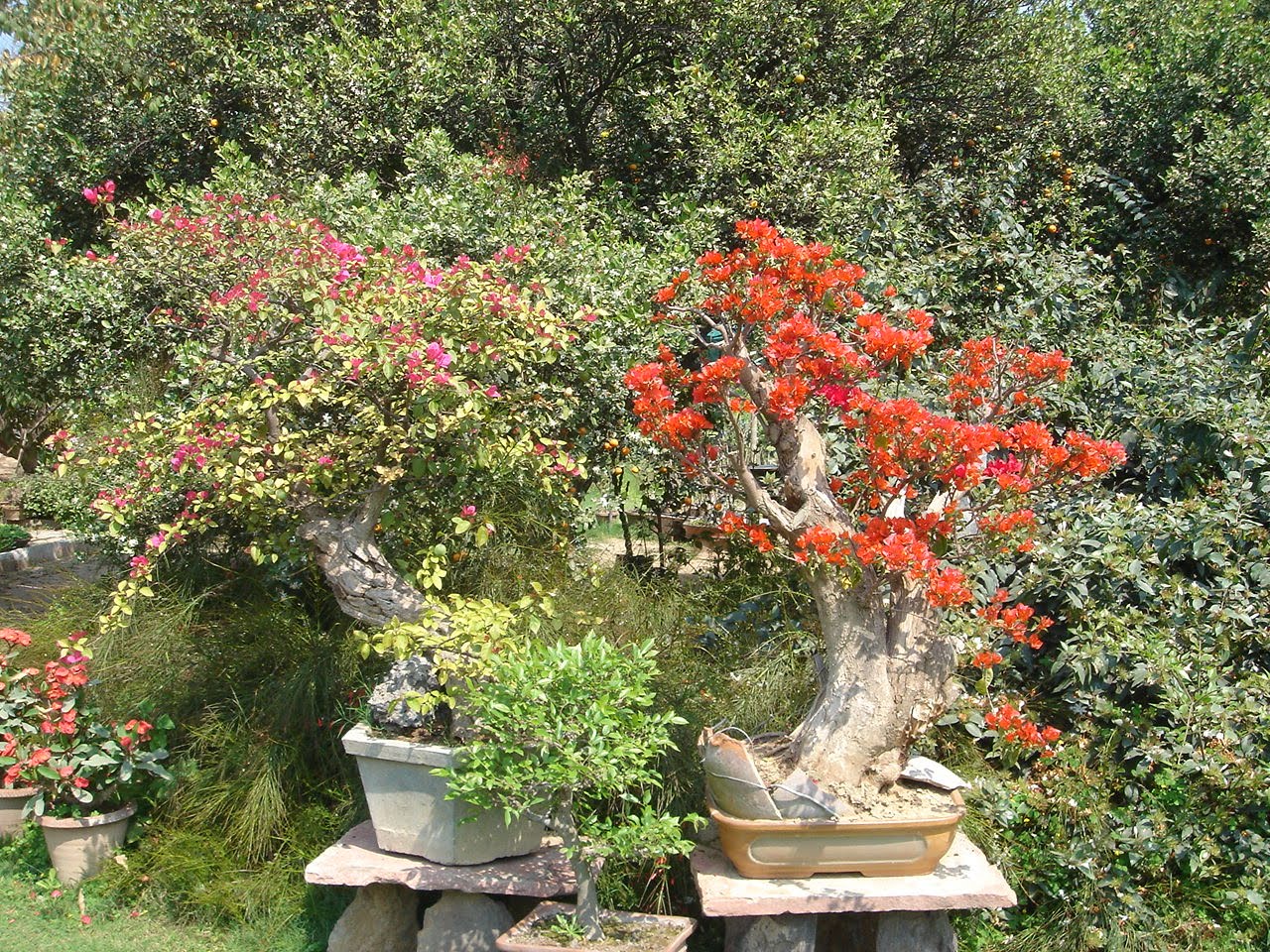
I also remembered the beautiful "Bonsai" garden of Renu Vaish in Kapashera(near Gurgaon) which the members of our Kitchen Garden Association visited on the fateful day of 11th March, 2011.


Images of the Japanese Bonsai garden, clicked just one hour before the earthquake struck Japan on 11th March, 1.04 PM, IST.

I am ending this blog with a photo from the ShantiStup in New Delhi.


Nichirin Buddhism, Shanti Stupa, New Delhi

Writing this blog has been cathartic for me. So, thank you, all of you who have had the patience to go through it.

Thursday, September 23, 2010

Kanha National Park


Here is a very economical offer to visit Kanha National Park in Madhya Pradesh!

Three days standard itinerary

2 Nights/ 3 days stay charges

Plus

Meals (Breakfast-Lunch-Dinner)

Pick up and drop facility from Gondia Station and back

Two visits to Kanha National Park


Rs 18400/- per batch of six persons

This offer is courtesy Kanha Village Camp

Sunday, March 21, 2010

World Housesparrow Day

Why celebrate a house sparrow day? Because, the lowly but sturdy sparrows are a good indicator of bio diversity and their decline in urban areas is proof that we have succumbed to chemical fertilizers and pesticides, not only in agricultural fields which are around us but also in the small kitchen gardens next to our homes.


20th March 2010 was celebrated as the first Worldhousesparrowday. Delhi Chief Minister Sheila Dixit unveiled a nest box for sparrows made by "NatureForever" while Mr. Asad Rahmani of BNHS looked on.


That the Chief Minister of Delhi spared time for the cause is proof that organic gardens in and around our homes must show the way for sparrows. The CM herself has converted the compound of her bungalow to a "Green Canopy" open to public for nature trails. Fruit bats outside the CM's house kept a caophony going at the inaugural function held at her residence.


Write-up about fruit bats at the interpretation Centre at 3, Motilal Nehru Place

Mrs. Barack Obama hosting organic lunches for children from produce of her kitchen garden made news recently. Realization is dawning worldwide that we need to say no to chemical fertilizers and pesticides, to protect ourselves, if not the sparrows. Sparrows are but an indicator of what is in store for our future generations.


The vermi compost pit


Sheila Dixit's organic garden


Ms Lima Rosalind explaining the digital kiosk at the interpretation centre to a visitor.

Monday, October 12, 2009

IndianWildlifeClub is a finalist in DELL-UTVi awards.

IndianWildlifeClub is a finalist in DELL-UTVi awards.

http://www.dellhero.com/India/news.asp?id=44

Indian Wildlife Club - Gurgaon, Haryana, an Online Community of Practice, has leveraged latest technologies and a fresh approach to spread the message of conservation and environment education. The portal enables users to share their knowledge through articles in e-zines, Blogs, discussion groups and documentaries, submit multi-media trip reports, and share their observations on interesting places/ideas, and also browse and place orders for photographs and calendars, from the online repository.

Saturday, January 24, 2009

River Beas

This blog is impressionistic, as I feel torn between a great love for rivers, the need to keep them as pure as we can and the need for many of us to use the river as a 'consumable'. The subject is the Beas River at Kaleswar, Kangra, Himachal Pradesh.
Double click on the pictures to get a closer view.


The picture shows the steps leading to Beas and the bathing houses(?) built on its banks supposedly from the time of the Pandavas. Kaleswar is closely associated with stories of the exile of Pandavas into the forests.


These are Samadhis for Sadhus built on the banks of Beas. Again, dating to the epic period.


A cremation in progress on the river banks. Kaleswar is considered second only to Haridwar in conducting funeral rites.


At the bottom of the picture you can see a truck filling sand from the bottom of the river.


'Panchtirthi' is considered a holy place to take a dip. The water in this 'Kund' is from the pure mountain stream, before it joins Beas below. A red start is waiting to take a dip too!


We walk through this 'Khad' to reach the flowing river. Water from this river is probably going to meet the needs of the residents around.

Beas is still not as polluted as Ganges. May be this is the time to do something proactive so that Beas does not meet the fate of the Ganges.